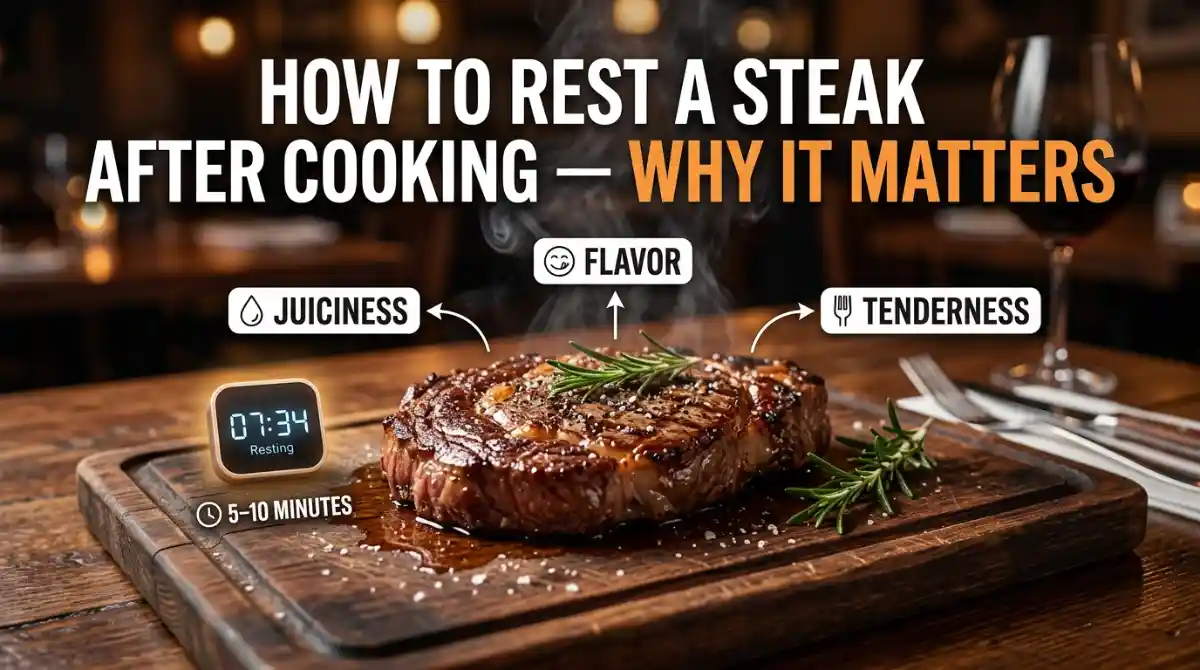
You just pulled a perfectly seared steak off the cast iron. The crust is golden. The smell is incredible. Every instinct says cut it now.
Don’t.
That one moment of patience — resting your steak — is what separates a restaurant-quality result from a dry, disappointing dinner. Whether you’re cooking at home in Islamabad or grilling outdoors, resting steak after cooking is the single most overlooked step in the entire process.
This guide explains exactly how to rest a steak, why it matters, how long different cuts need, and the common mistakes that ruin an otherwise perfect cook.
What Does Resting a Steak Actually Mean?
Resting a steak simply means letting it sit off the heat for a few minutes before you slice into it.
That’s it. No fancy equipment. No complicated technique. Just time.
But what happens during those few minutes is pure food science — and understanding it will change the way you cook steak forever.
The Science Behind Resting Steak
When a steak hits a hot pan or grill, intense heat causes the muscle fibers to contract sharply. This contraction pushes all the moisture — the juices — toward the center of the meat. Think of it like squeezing a wet sponge. Everything gets forced inward.
If you cut the steak immediately after cooking, those juices are still under pressure. They rush out the moment your knife breaks the surface. You’ve seen it: that red puddle spreading across the cutting board. That’s not just liquid — that’s flavor, moisture, and tenderness running away from your dinner.
When you let the steak rest, a few things happen:
- Muscle fibers relax. The heat-driven contraction reverses. Fibers loosen and reabsorb the juice that was pushed to the center.
- Juice redistribution occurs. Instead of all moisture sitting in one dense center point, it spreads evenly throughout the cut.
- Carryover cooking completes. The steak continues to cook internally from residual heat, rising another 3 to 5 degrees Fahrenheit. This is why pulling a steak slightly before your target temperature is always the right move.
- Steak moisture retention improves. When you finally slice, the juices stay in the meat instead of flooding the board.
The result? A juicier, more flavorful, more evenly cooked steak — every single time.
According to food science research, a rested steak loses significantly less moisture on cutting compared to one sliced immediately. Some culinary studies suggest the difference in juice loss can be as much as 40%. That’s almost half your steak’s moisture gone in one impatient slice.
How Long Should You Rest a Steak After Cooking?
The resting time depends on the thickness and cut of the steak. Here’s a simple, practical guide:
General Rule: Rest your steak for approximately half the time it took to cook — or use the thickness guide below.
| Steak Cut / Thickness | Resting Time |
|---|---|
| Thin steak (under 1 inch) | 3 to 5 minutes |
| 1-inch steak (ribeye, sirloin, NY strip) | 5 to 7 minutes |
| 1.5-inch steak | 7 to 10 minutes |
| 2-inch steak or thicker (tomahawk, T-bone) | 10 to 15 minutes |
| Filet mignon | 5 to 7 minutes |
| Reverse-seared thick cuts | Up to 15 minutes |
For thin cuts like skirt steak or flank steak, even 3 to 5 minutes makes a meaningful difference. Don’t skip it just because the cut is small.
For a thick tomahawk — the kind you might see served at a premium steakhouse — giving it a full 10 to 15 minutes is genuinely worth it. If you love the experience of a proper tomahawk, check out what the best steak restaurants in Islamabad in 2026 are serving and how they handle this step.
Should You Cover Steak While It Rests?
This is one of the most debated questions in steak cooking — and the answer is nuanced.
Loose foil tenting is acceptable, but not always necessary.
Here’s the honest breakdown:
- Tenting with foil traps some heat and helps the steak stay warm during resting. But if you seal it too tightly, steam builds up and softens that beautiful crust you worked so hard to develop.
- No covering lets the crust stay crisp but allows more heat to escape, which can make the steak feel slightly cooler when served.
- Wire rack resting is the best method if you want to preserve the crust. Place the steak on a wire rack over a plate. Air circulates underneath, the crust stays intact, and juices are caught below.
The best approach for most home cooks: rest uncovered on a warm plate or wire rack, in a warm area of your kitchen away from drafts. If you’re worried about temperature, a brief loose tent for the last minute or two is fine.
How to Rest a Steak Without It Getting Cold
Nobody wants a cold steak. Here’s how to keep things warm during the rest:
- Warm your plate first. Run hot water over the serving plate, or put it in the oven at the lowest setting for 5 minutes, then remove and dry before placing the steak.
- Rest in a warm spot. The area near your stove (away from direct heat) is ideal. Residual warmth helps maintain temperature.
- Use a wire rack over a cutting board. This keeps the steak elevated, preventing the bottom from steaming itself.
- Avoid cold surfaces. Marble countertops and metal surfaces pull heat out of the steak fast. Use wood or a warm ceramic plate.
- Don’t rest near a fan or open window. Air movement accelerates heat loss significantly.
If you’re serving steak in Pakistan’s cold winter months — especially in Islamabad where evenings can drop sharply — these steps matter even more. A warm kitchen environment, a pre-warmed plate, and a brief rest is all you need.
Does Steak Continue to Cook While Resting?
Yes — and this is one of the most important things to understand about steak cookery.
This phenomenon is called carryover cooking. Even after you remove the steak from heat, the surface temperature is significantly higher than the center. That heat continues traveling inward, raising the internal temperature by 3 to 5 degrees Fahrenheit in a standard cut — and potentially more in a very thick one.
This is exactly why professional chefs pull steak 3 to 5 degrees below their target temperature. A medium-rare steak targeting 130°F (54°C) gets pulled at around 125°F (52°C). Resting brings it the rest of the way.
If you want to understand more about steak doneness temperatures and what each level looks and tastes like, the guide on the difference between rare, medium, and well done steak covers every level in detail.
Step-by-Step Steak Resting Guide
Here’s exactly how to rest a steak properly from start to finish:
Step 1: Pull the steak slightly early. Remove it from the pan or grill about 3 to 5 degrees below your target internal temperature. Use a meat thermometer for precision.
Step 2: Transfer to a warm resting surface. Use a wire rack, warm cutting board, or pre-warmed plate. Never rest on a cold surface.
Step 3: Leave it alone. Do not poke, press, or cut into it. Resist the temptation entirely.
Step 4: Tent loosely if needed. If your kitchen is cold or you need extra time, tent with foil — but keep it loose to avoid steaming the crust.
Step 5: Time it correctly. Follow the cut-specific resting times listed above. Set a timer so you don’t rush.
Step 6: Slice against the grain and serve immediately. Once rested, slice and plate without delay. A rested steak doesn’t hold heat forever.
Common Steak Resting Mistakes
Even experienced home cooks make these errors:
Mistake 1: Cutting too early. The most common error. Even one extra minute makes a measurable difference. If you’ve invested 20 minutes cooking a great steak, give it 7 more to rest. It’s worth it.
Mistake 2: Resting on a cold plate. A marble slab or metal tray pulls heat out instantly. Always use a warm or neutral surface.
Mistake 3: Wrapping too tightly in foil. Tight foil = steam = lost crust. Keep it loose or skip the foil entirely.
Mistake 4: Resting in the fridge. This sounds obvious, but some people try to “hold” a steak for later by refrigerating it mid-rest. This kills the carryover cooking process and makes the steak contract again.
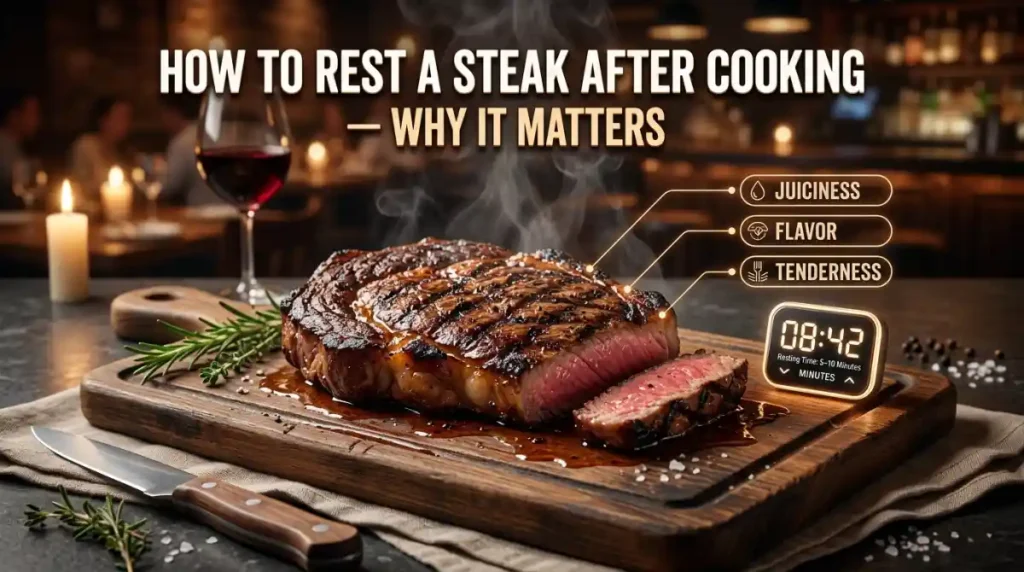
Mistake 5: Resting too long. Yes, you can rest a steak too long. Beyond 15 to 20 minutes, most steaks start cooling too much for a good serving temperature. A 2-inch tomahawk can go 15 minutes. A 1-inch sirloin should not sit for 20.
Resting Different Cuts — What You Need to Know
Different cuts behave slightly differently at rest. Here’s what to keep in mind:
Ribeye: Rich in fat and marbling, which means it retains heat well. 5 to 8 minutes is ideal. The fat stays luscious and the crust stays crisp.
NY Strip: Leaner than ribeye, so it loses heat slightly faster. Aim for 5 to 7 minutes and keep it in a warm spot.
T-Bone / Porterhouse: The bone retains heat, which helps during resting. 8 to 12 minutes works well depending on thickness.
Filet Mignon: Extremely lean and tender. Less resting time needed — 5 minutes is usually enough. Don’t over-rest it.
Flank / Skirt Steak: Thin and flat — 3 to 5 minutes, no more. These cool fast.
Tomahawk: The showstopper cut. The long rib bone acts as a heat conductor. Give it 12 to 15 minutes comfortably. If you’re curious about cut differences beyond resting, the comparison of sirloin vs ribeye vs T-bone is a great read.
Resting Steak and Open Fire Grilling
Open fire grilling adds another layer to the resting conversation. When a steak is cooked over open flame — the way it’s done at serious grill restaurants — the surface temperature is dramatically higher than pan-searing. The crust develops faster, and the heat differential between outside and inside is more extreme.
This means open-fire grilled steaks especially benefit from resting. The carryover cooking effect is stronger, and the muscle fiber contraction is more intense due to higher surface heat.
If you’re curious about how open fire affects flavor beyond just resting, the science of open fire grilling and steak flavor breaks down exactly what makes flame-grilled steak taste different.
How Resting Fits Into the Full Steak Experience in Islamabad
If you’ve been cooking steak at home in Islamabad and wondering why it never quite matches restaurant quality — resting might be the missing step.
The best steakhouses in the city follow this process without exception. Chefs at premium restaurants understand that a steak arriving at your table with all its juices intact, sliced cleanly across the grain, is the result of a disciplined rest period in the kitchen.
If you want to experience what a properly rested steak feels and tastes like before attempting it yourself, visiting the top restaurants in Super Market F-6 Islamabad is a great starting point. Watching how restaurants serve steak — the way it holds its moisture, the way it cuts — teaches you what you’re aiming for at home.
For a special occasion, the best romantic dinner restaurants in Islamabad consistently deliver that experience, where resting is built into kitchen timing as a non-negotiable.
Does Resting Apply to All Steaks?
Mostly yes — but with nuance.
Very thin steaks (under half an inch) benefit less from resting because the heat differential between surface and center is minimal. There’s simply less science at work in a paper-thin cut.
Sous vide steaks are a special case. Because sous vide cooking brings the entire steak to the same temperature throughout, there’s no major heat differential to equalize. However, a brief 2 to 3 minute rest after searing is still helpful for juice redistribution at the surface level.
All other standard steaks — from a budget beef sirloin to a premium wagyu ribeye — benefit meaningfully from proper resting time.
If you’re sourcing quality halal beef in Islamabad, understanding what to look for in halal steak is worth reading before you shop. Better quality meat rests better and delivers more juice on the plate.
Frequently Asked Questions
How long should steak rest after cooking? Between 5 and 15 minutes depending on thickness. A 1-inch steak needs about 5 to 7 minutes. A 2-inch or thicker cut needs 10 to 15 minutes.
Does resting steak make it juicier? Yes, significantly. Resting allows muscle fibers to relax and reabsorb juices that were pushed inward by cooking heat. A rested steak retains far more moisture when cut.
Should I cover my steak while it rests? A loose foil tent is acceptable, but not required. Tight covering creates steam and softens the crust. A wire rack with no covering is often the best approach.
Can you rest a steak too long? Yes. Beyond 15 to 20 minutes, most steaks cool to an unpleasant serving temperature. Match resting time to cut thickness.
What happens if you don’t rest a steak? Juices flood out immediately when you cut. The steak becomes drier, less flavorful, and the moisture pools on your cutting board instead of staying in the meat.
Does steak continue cooking while resting? Yes. This is called carryover cooking. Internal temperature rises by 3 to 5 degrees after removal from heat. Always pull steak slightly below your target temperature to account for this.
How do you rest a steak without it getting cold? Use a pre-warmed plate, rest near (not on) a warm stove, and avoid cold surfaces or drafts. A loose foil tent for the final minute can help in cold kitchens.
Should steak rest on a plate or cutting board? Either works, but a wire rack over a plate is best. It prevents the bottom from steaming and keeps the crust intact. Avoid cold cutting boards made of marble or metal.
How long to rest a 1-inch steak? 5 to 7 minutes is ideal for most 1-inch cuts including ribeye, sirloin, and NY strip.
Can I rest steak in the oven on low heat? A very low oven (around 150°F / 65°C) works for keeping a steak warm during rest, but be careful not to continue cooking it. This method suits thick cuts when serving is delayed.
The Bottom Line
Resting a steak is not a suggestion — it’s a fundamental part of the cooking process. The science is clear: muscle fibers contract under heat, juices migrate inward, and only patience allows them to redistribute evenly throughout the meat.
Give your steak the rest it deserves. Pull it early, set it on a warm surface, wait the appropriate time for its thickness, and slice with intention.
That’s how restaurant-quality steak is made — whether you’re in a Michelin-starred kitchen in New York or cooking on a Friday evening in Islamabad.
Experience a Perfectly Rested Steak Without the Guesswork
If you want to taste what all of this looks like on a plate — juicy, properly rested, served at the right temperature — book a table today at American Steak House Islamabad and enjoy dinner the way it’s meant to be.
From our open-fire grilled cuts to our carefully crafted menu, every steak that leaves our kitchen has been rested, sliced with care, and served at peak quality.
Explore our Menu — Book Your Table — See What Guests Are Saying
Whether it’s a birthday celebration, a romantic dinner, or simply the best steak you’ve had in Islamabad — we’re ready when you are.