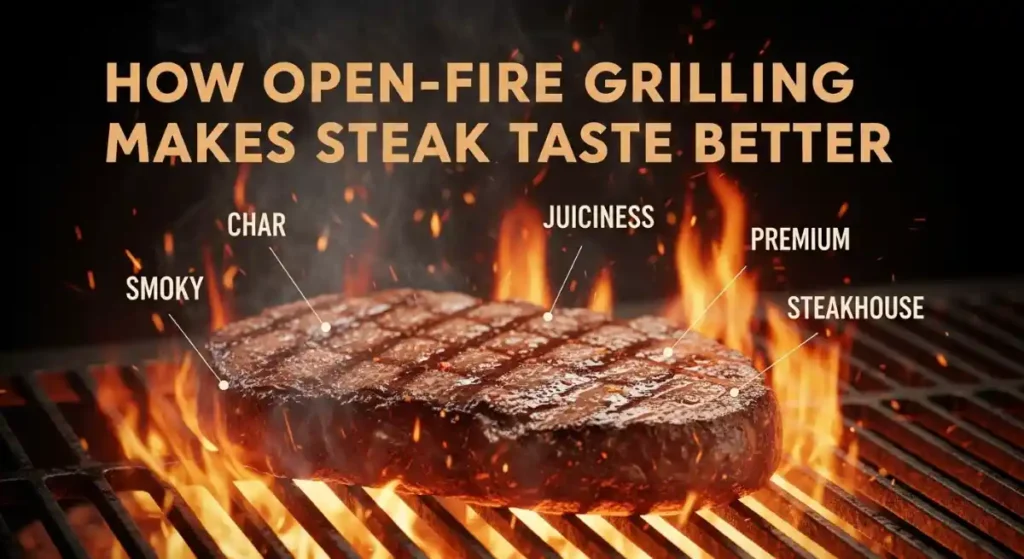
There is something deeply satisfying about the smell of a steak sizzling over an open wood fire. It is not just nostalgia or ambiance — the science, the technique, and the flavor results are genuinely different from anything a gas burner can produce. If you have ever wondered why open fire grilling makes steak taste better, you are about to get a full, honest answer.
Whether you are a backyard grilling enthusiast, a camping cook, or a steak lover searching for the best open fire steak experience in Islamabad, this guide covers everything — the chemistry, the method, the cuts, and the results.
What Actually Makes Open-Fire Grilled Steak Different?
Open fire grilling is one of the oldest cooking methods in human history. Long before gas grills, long before ovens, humans cooked meat over flame — and the flavor that emerged from that primal process has never truly been replaced.
The difference comes down to three things: radiant heat, wood smoke compounds, and the Maillard reaction. Together, these three elements create a flavor depth that a gas grill simply cannot match.
The Maillard Reaction — The Secret Behind That Perfect Crust
The Maillard reaction occurs when the surface proteins and sugars in meat are exposed to temperatures above 285°F (140°C). At this point, hundreds of flavor compounds are formed simultaneously — creating the deep brown, caramelized crust on the outside of a perfectly seared steak.
Open fire grilling produces intense, radiant infrared heat from white-hot coals. This heat hits the steak surface fast and hard, creating a superior crust formation compared to gas or electric cooking. The result is a firm, deeply flavored bark on the outside while the inside stays tender and juicy.
When you visit American Steak House Islamabad, every steak that leaves the kitchen carries exactly this kind of crust — formed over live fire, not manufactured heat.
Wood Smoke Flavor — The Invisible Ingredient
Wood smoke is not just ambiance. It is chemistry.
When hardwood burns — oak, hickory, or mesquite — it undergoes a process called pyrolysis. During pyrolysis, the wood releases volatile compounds including phenols, guaiacol, and syringol. These compounds penetrate the outer layer of the steak during cooking and bind to the fat, creating what we describe as a “smoky,” “earthy,” or “deep” flavor that you simply cannot replicate with gas.
The longer a steak cooks over a wood fire at a slightly lower temperature, the more smoke it absorbs. This is why a steak cooked over white-hot coals at a raised grate position develops layers of flavor — not just a surface char.
Best woods for grilling steak over open fire:
- Oak — strong, clean burn, classic smoky flavor
- Hickory — bold and assertive, pairs well with ribeye
- Mesquite — intense and fast-burning, best for shorter cooks
- Cherry or Apple wood — lighter smoke with subtle sweetness
Avoid softwoods like pine or cedar. They contain resins that produce bitter, acrid smoke that ruins the steak’s flavor.
Radiant Heat vs. Convection Heat
Gas grills primarily cook through convection — hot air moving around the meat. Open fire cooking, by contrast, uses direct radiant heat from glowing coals. Radiant heat penetrates the steak surface more aggressively, searing the exterior faster while allowing better control over internal doneness when combined with a two-zone setup.
This is why open fire steak flavor is richer, more complex, and more satisfying. The heat itself is a different animal.
The Science of Fat Rendering Over Open Flame
One of the reasons fire grilled ribeye steak tastes incredible is how fat behaves over open flame.
As the steak heats up, the intramuscular fat — the marbling inside the meat — begins to render and melt. This fat bastes the steak from the inside out, keeping it moist and adding richness. When fat drips onto the coals below, it vaporizes almost instantly and rises back up as flavorful smoke, coating the exterior of the steak in a continuous loop of flavor exchange.
This is why grass-fed beef with good marbling, like a USDA Prime ribeye or a well-marbled sirloin, is ideal for open fire cooking. The fat-to-muscle ratio matters enormously.
For a deeper look at which steak cut performs best over high heat, check out this guide on the best steak cuts — Sirloin vs Ribeye vs T-Bone from American Steak House Islamabad.
Best Steak Cuts for Open Fire Grilling
Not every cut thrives over an open fire. Here are the best choices ranked by performance:
Ribeye — The undisputed king of open fire grilling. High marbling means constant fat basting. Handles high heat without drying out. This is the best steak to cook on open fire.
T-Bone / Porterhouse — Two muscles in one cut. The bone adds flavor. Ideal for a wood fire setup where you can control zones.
Sirloin — Leaner but robust in flavor. Works well with a strong wood like hickory to compensate for lower fat content.
Flank Steak — Best marinated before fire grilling. Absorbs smoke flavor quickly due to its open texture.
Tomahawk — The long bone radiates heat beautifully. Perfect for reverse sear on open fire.
If you are unsure about doneness levels for any of these cuts, the guide on the difference between rare, medium, and well-done steak at American Steak House is an excellent reference.
How to Build a Proper Fire for Grilling Steak
To grill steak over wood fire at home, the fire itself is the foundation. A poorly built fire produces uneven heat, excessive flames, and bitter smoke. A well-built fire produces white-hot coals, consistent radiant heat, and excellent smoke.
Step 1 — Choose your fuel. Use hardwood lump charcoal as your base. Add chunks of oak or hickory for smoke flavor. Avoid briquettes with chemical additives — they produce off-flavors.
Step 2 — Build and ignite. Stack your wood and charcoal in a pyramid. Use a chimney starter rather than lighter fluid. Lighter fluid leaves a chemical aftertaste on the meat.
Step 3 — Wait for white-hot coals. This is the most important step. Do not start cooking over open flames. Wait until the coals are covered in a layer of white-grey ash. This indicates they are at their hottest and most stable — around 600–700°F surface heat.
Step 4 — Set up two zones. The two-zone fire grilling method is essential. One side of the grate sits directly over the coals — this is your sear zone. The other side has no coals beneath it — this is your finishing zone. You sear the steak over direct heat, then move it to the cooler side to finish cooking to your exact internal temperature.
Step 5 — Control height. In traditional Argentine parrilla-style grilling and Santa Maria style grilling, the grate height is adjustable. Raising the grate away from the coals reduces heat; lowering it increases intensity. This is your “thermostat.”
How to Grill Steak Over Open Fire — Step by Step
Now that the fire is ready, here is exactly how to cook a perfect open fire steak:
1. Bring the steak to room temperature. Remove from the fridge at least 45–60 minutes before cooking. A cold steak hitting hot coals cooks unevenly.
2. Season simply. Coarse sea salt, cracked black pepper, and a light brush of avocado oil or grapeseed oil (both have high smoke points). Some pitmasters add Worcestershire sauce before applying the dry rub — it helps the seasoning adhere and adds a subtle umami note.
3. Sear over direct heat. Place the steak directly over the white-hot coals. Do not touch it for 2–3 minutes. Let the Maillard reaction do its work. Flip once. Sear the second side for another 2–3 minutes.
4. Move to the indirect zone. Once both sides are seared, move the steak to the cooler side of the grate. Close any cover or tent with foil to trap heat. Let it come up to your desired internal temperature.
Open fire steak internal temperature guide:
- Rare: 120–125°F
- Medium Rare: 130–135°F
- Medium: 140–145°F
- Medium Well: 150–155°F
- Well Done: 160°F+
Use a digital thermometer. Do not guess with open fire cooking — it is more unpredictable than a controlled grill.
5. Rest the steak. Remove from the fire and rest under loose foil for 5–8 minutes. This allows juices to redistribute throughout the meat. Skipping this step is the single biggest mistake most people make.
6. Add compound butter. A pat of herb compound butter — thyme, rosemary, garlic — melted over the hot steak at rest is the finishing touch that elevates a great steak to an unforgettable one.
Open Fire vs. Charcoal Grill vs. Gas Grill — Which Produces Better Steak?
This is one of the most searched questions in grilling: does open fire grilling make steak more flavorful than a gas grill?
The answer is yes — and here is why in plain terms:
Gas Grill — Clean and convenient. Controllable. But produces zero wood smoke compounds and relies on convection heat. The flavor ceiling is limited.
Charcoal Grill — Better than gas. Lump charcoal produces radiant heat similar to open fire and some smoke. But a closed-lid charcoal grill does not allow the same smoke dynamics as a fully open fire.
Open Fire / Live Fire — The full experience. Real wood produces real smoke compounds. Radiant coal heat creates superior crust formation. Fat dripping and vaporizing creates a continuous flavor loop. This is the most complex, layered flavor result of any cooking method.
The difference is not subtle once you have experienced a properly cooked live fire steak.
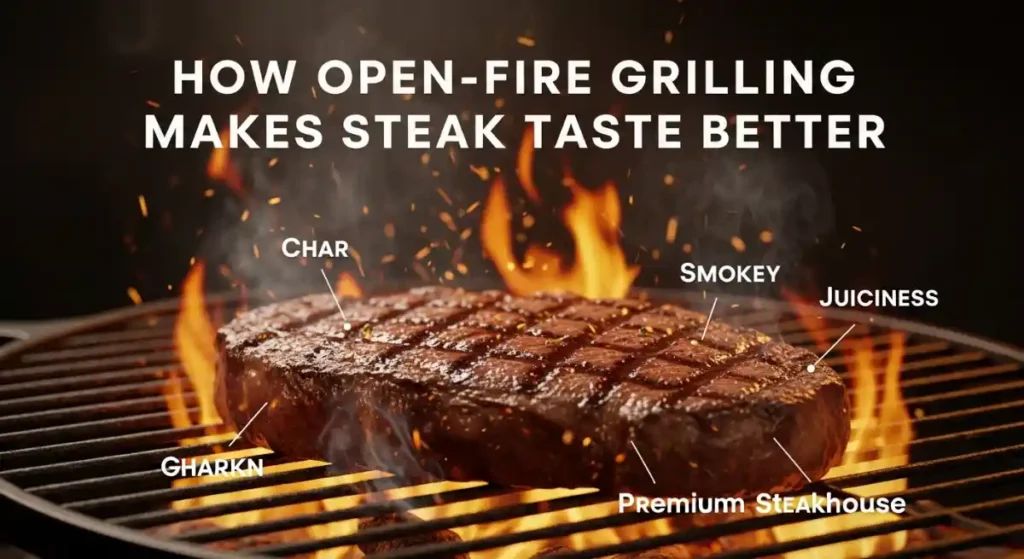
Open Fire Steak Culture Around the World
Open fire grilling steak is not just a backyard hobby — it is a culinary tradition with deep cultural roots worldwide.
Argentina — The parrilla tradition is the backbone of Argentine food culture. Parrilla-style steak grilling uses a brasero to produce coals, then transfers them under an adjustable grate. Parrilla Don Julio in Buenos Aires has been recognized as one of the world’s top steakhouses for this exact method.
United States — Santa Maria, California — Santa Maria style grilling uses red oak over a crank-adjustable grate. It is one of America’s oldest live fire BBQ traditions, dating back to the 19th century.
Spain — Wood-fired beef is deeply embedded in Spanish culinary culture, particularly with long-aged ox beef.
Australia — Sydney’s wood-fire cooking scene has grown significantly, with restaurants earning international recognition for live-fire beef preparation.
All of these traditions share one principle: the open fire produces something that no modern appliance can replicate.
Halal Open Fire Steak in Islamabad — What You Need to Know
For steak lovers in Pakistan, finding premium quality, properly prepared, halal certified open fire grilled steak is not always easy. Most restaurants in Islamabad serve decent grilled meat, but few truly master the open fire technique.
American Steak House Islamabad, located in F-6, is one of the rare restaurants in the city that takes open fire cooking seriously. Every steak on the menu is halal certified, sourced from quality beef, and prepared with the technique and care that the open fire method demands.
If you want to know exactly what to look for when ordering halal steak in Islamabad, this resource on halal steak in Islamabad — what to look for covers it thoroughly.
For residents and visitors looking at top restaurants in Super Market F-6 Islamabad, American Steak House consistently ranks among the highest-rated options for quality, ambiance, and food.
The Best Occasions to Experience Open Fire Steak
A great open fire steak is not just a meal — it is an event. Here are the occasions where it matters most:
Birthday Celebrations — There is no better centerpiece for a birthday dinner than a perfectly fire-grilled tomahawk or ribeye. American Steak House offers a dedicated birthday celebration experience — see details at best birthday celebration restaurants in Islamabad.
Romantic Dinner — The warmth of fire-cooked food and the depth of flavor makes open fire steak ideal for a date night. Explore options at best romantic dinner restaurants in Islamabad.
Late Night Dining — Craving a steak after 10 PM in Islamabad? American Steak House is available. Check late night food options in Islamabad for hours and availability.
Iftar Dinner — During Ramadan, a rich, fire-grilled steak is one of the most satisfying iftar meals available. Deals and packages are covered at best iftar dinner deals in Islamabad 2026.
Is Open Fire Grilling Healthier Than Gas Grilling?
This is a fair question. According to research published by food science institutions and referenced by health authorities, the cooking method does affect the nutritional profile of meat to a degree.
Open fire grilling at very high temperatures directly over flames can produce heterocyclic amines (HCAs) if the meat is charred excessively. The key is to cook over white-hot coals, not live flames, and to keep the grate at an appropriate height. Properly executed open fire grilling — controlled heat, minimal charring, correct resting — produces a steak that retains its nutrients, does not introduce harmful char compounds, and is not materially different from other dry-heat cooking methods in terms of health impact.
For balanced, evidence-based dietary guidance on meat consumption, the World Health Organization provides updated nutritional recommendations on their official site.
FAQs — Open Fire Grilling Steak
Why does steak taste better cooked on open fire? Open fire grilling produces radiant heat from white-hot coals, which creates a deep Maillard reaction crust on the steak’s exterior. Wood smoke compounds from hardwood — phenols, guaiacol — penetrate the meat and bond with fat, adding complex smoky flavor impossible to replicate with gas cooking.
What is the best wood to use when grilling steak over open fire? Oak, hickory, and mesquite are the top choices for open fire steak grilling. Oak gives a clean, classic smoke flavor. Hickory is bolder and works well with ribeye. Mesquite burns hot and fast, best for shorter, high-heat cooks.
What temperature should steak reach when cooking on open fire? For medium rare — the most recommended doneness for open fire steak — the internal temperature should reach 130–135°F. Use a digital thermometer; open fire is unpredictable and touch-testing is less reliable than on a controlled grill.
How do I prevent steak from burning on an open fire? Cook over white-hot coals, not over open flames. Use the two-zone fire method — sear over direct heat, then finish over the indirect zone. Keep your thermometer handy and adjust grate height as needed.
What cuts of steak are best for open fire grilling? Ribeye is the top choice due to its high marbling. T-bone, sirloin, and tomahawk are also excellent. Leaner cuts like flank steak benefit from marinating before fire cooking.
How long should I let steak rest after open fire grilling? Rest the steak for at least 5–8 minutes under loose foil. This allows the internal juices to redistribute and results in a noticeably juicier, more flavorful bite.
Can I grill steak over an open campfire? Yes. Use a campfire grill grate positioned 2–6 inches above white-hot coals. Build a fire, let it burn down to coals, then cook. The flavor results are excellent — arguably some of the best steak you will ever eat.
Does wood fire make steak taste better than a gas grill? Yes, significantly. Gas grills produce no wood smoke compounds and rely on convection heat rather than radiant coal heat. Open fire produces a Maillard crust, smoke flavor penetration, and fat-drip vapor cycling — none of which gas can reproduce.
Book Your Table at American Steak House Islamabad Today
If you have read this far, you already know that a great open fire steak is not just food — it is an experience built on science, tradition, and craft.
At American Steak House Islamabad, located in F-6, every steak on the menu is halal, every cut is selected for quality marbling, and every dish is prepared with the technique this article has described. Whether you are coming for a business dinner, a birthday celebration, a romantic evening, or simply because you want the best steak in Islamabad — the kitchen is ready for you.
Explore the full menu here and see what is waiting for you. Read what other diners have said on the testimonials page. Browse the gallery to see the food before you arrive. Or simply contact us to make a reservation.
Book your table today at American Steak House Islamabad and enjoy a steak dinner that reminds you why open fire is the only fire that truly matters.