
Rare steak is cooked to 120–130°F (49–54°C) with a red, cool center. Medium steak reaches 140–150°F (60–65°C) with a warm pink center. Well done steak is cooked to 160°F+ (71°C+) with a fully brown interior. The main difference lies in internal temperature, color, juiciness, and texture — each suiting a different taste preference.
─────────────────────────────────────────
Introduction: Why Steak Doneness Matters
─────────────────────────────────────────
If you’ve ever sat at a steakhouse and heard the waiter ask “How would you like that cooked?” — and panicked a little — you’re not alone. Steak doneness is one of the most misunderstood things in the world of food.
And honestly? Getting it right can be the difference between the best meal of your life and a tough, dry disappointment.
Whether you’re dining at the best steakhouse in Islamabad or cooking at home, knowing your doneness levels will completely change how you enjoy beef. In this guide, we break down every steak doneness level — rare, medium rare, medium, medium well, and well done — with temperatures, colors, textures, and expert tips.
Let’s get into it.
─────────────────────────────────────────
What Are Steak Doneness Levels?
─────────────────────────────────────────
Steak doneness refers to how thoroughly a piece of beef has been cooked — measured primarily by its internal temperature. The more heat applied, the more the proteins inside the meat change, which affects color, texture, moisture, and taste.
There are five main doneness levels:
- Rare
- Medium Rare
- Medium
- Medium Well
- Well Done
Each level has a specific temperature range, visual appearance, and flavor profile. Let’s explore each one.
─────────────────────────────────────────
📊 Steak Doneness Comparison Table
─────────────────────────────────────────
(Use this table in your website for featured snippet eligibility)
| Doneness | Internal Temp (°F) | Internal Temp (°C) | Color Inside | Texture | Juiciness |
|---|---|---|---|---|---|
| Rare | 120–130°F | 49–54°C | Deep red, cool | Very soft | Very juicy |
| Medium Rare | 130–135°F | 54–57°C | Warm red-pink | Soft & tender | Very juicy |
| Medium | 140–150°F | 60–65°C | Pink center | Slightly firm | Juicy |
| Medium Well | 150–160°F | 65–71°C | Slightly pink | Firm | Slightly dry |
| Well Done | 160°F+ | 71°C+ | Brown/gray, no pink | Very firm | Dry |
─────────────────────────────────────────
- Rare Steak — Bold, Red, and Full of Flavour
─────────────────────────────────────────
Rare steak is cooked to an internal temperature of 120–130°F (49–54°C). The outside gets a quick sear while the inside remains mostly red and cool to the touch.
What does rare steak look like inside?
The center is a vivid red or dark red color. It will feel very soft when you press it — almost like pressing the flesh below your thumb when your hand is completely open.
What does rare steak taste like?
It has the most intense beefy, meaty flavor of any doneness level. Because so little heat reaches the center, the natural juices (often mistaken for blood — more on that below) are fully retained.
Is rare steak safe to eat?
Yes — for whole cuts of beef like ribeye, sirloin, or filet mignon. Because bacteria live on the surface of whole beef cuts, the hot sear kills them before they reach the interior. However, rare steak is not recommended for pregnant women, young children, elderly people, or anyone with a compromised immune system, based on food safety guidelines from the CDC (https://www.cdc.gov/foodsafety).
Best cuts for rare: Ribeye, Tenderloin (Filet Mignon), T-Bone
Cook time: About 2 minutes per side on high heat
─────────────────────────────────────────
- Medium Rare Steak — The Gold Standard
─────────────────────────────────────────
Ask any professional chef what the ideal steak doneness is, and almost all of them will say: medium rare. Internal temperature: 130–135°F (54–57°C).
What does medium rare steak look like?
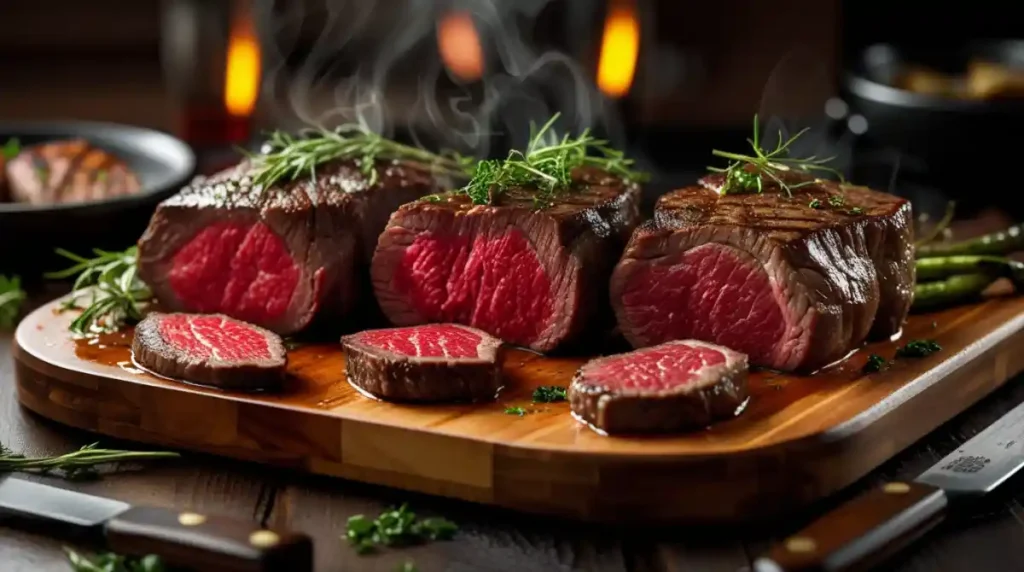
A warm red-to-pink center, with a beautiful seared brown crust on the outside. The juices run pinkish-red when you cut it.
Why do chefs prefer medium rare steak?
At this temperature, the fat within the muscle (intramuscular fat, or marbling) begins to melt, releasing incredible flavor. The proteins are cooked just enough to firm up slightly while still retaining moisture. It’s the perfect balance of texture, flavor, and juiciness.
The Maillard reaction — the browning that happens on the surface — creates that irresistible crust without over-cooking the interior. This is the level where steak truly shines.
Cook time: About 3–4 minutes per side on high heat
─────────────────────────────────────────
- Medium Steak — The Crowd Pleaser
─────────────────────────────────────────
Medium steak sits at 140–150°F (60–65°C). This is the sweet spot for people who want some pink inside without the rawness of rare.
What does medium steak look like inside?
A rosy pink center, with no red. The outside is well-browned. When you cut it, the juices run clear-to-pale pink.
What does medium steak taste like?
It’s still juicy and flavorful, though slightly less so than medium rare. The texture is a bit firmer. For most casual steak lovers, medium is the perfect balance — cooked enough to feel “done,” but still moist and tender.
This is actually the most popular doneness preference in Pakistan and across South Asia, where diners tend to prefer less visible redness in their meat.
Cook time: About 4–5 minutes per side
─────────────────────────────────────────
- Medium Well Steak — Almost There
─────────────────────────────────────────
Medium well steak reaches 150–160°F (65–71°C). Only a faint trace of pink remains at the very center.
What does medium well steak look like?
Mostly brown inside, with just a hint of pink. The crust is firm and the texture is noticeably firmer than medium.
At this point, some moisture has been lost, so the steak begins to feel drier on the palate. It’s still edible and enjoyable for those who really dislike any pink, but most chefs would advise against going past medium unless necessary.
Cook time: About 5–6 minutes per side
─────────────────────────────────────────
- Well Done Steak — Fully Cooked Through
─────────────────────────────────────────
Well done steak is cooked to 160°F or above (71°C+). There is no pink anywhere — the entire interior is brown or grayish-brown.
Is well done steak dry?
Typically, yes. At this temperature, most of the moisture has been cooked out of the meat. The proteins have fully contracted, squeezing out natural juices. The result is a firmer, drier, and often chewier piece of meat.
Why is well done steak considered bad by chefs?
It’s not about snobbery — it’s about physics. The fat melts and drips away, the moisture evaporates, and the natural flavors are significantly reduced. A well done steak requires a very forgiving cut (one with high fat content) and careful technique to avoid turning it into shoe leather.
That said, a well done steak cooked patiently at lower heat can still be enjoyable — it just needs a skilled hand.
Does well done steak have less nutrients?
Slightly. High heat can reduce some B vitamins and cause more fat to render out. However, the difference is minor in the grand scheme of a balanced diet.
Cook time: About 6–8 minutes per side (use lower heat to avoid burning the outside)
─────────────────────────────────────────
The Red Juice in Steak — Is It Blood?
─────────────────────────────────────────
This is one of the most common steak myths. The red liquid you see in rare or medium rare steak is NOT blood. It’s myoglobin — a protein that stores oxygen in muscle tissue and turns red when it binds with water. All blood is drained during the butchering process. So there’s no need to worry about “blood” in your steak.
─────────────────────────────────────────
How to Check Steak Doneness Without a Thermometer
─────────────────────────────────────────
Professional chefs use the finger test — pressing the steak and comparing its firmness to different parts of your hand:
- Open hand, press the flesh below your thumb → that’s how RARE feels
- Touch your index finger to thumb, press same spot → MEDIUM RARE
- Touch your middle finger to thumb → MEDIUM
- Ring finger to thumb → MEDIUM WELL
- Pinky to thumb → WELL DONE
The firmer the steak feels, the more done it is. That said, for perfect results every time, a digital meat thermometer is the most reliable tool.
─────────────────────────────────────────
Steak Doneness by Cut — Which Level Suits Which Cut?
─────────────────────────────────────────
Not every steak performs well at every doneness level. Here’s a quick guide:
Ribeye: Best at medium rare to medium — the fat marbling melts beautifully
Filet Mignon (Tenderloin): Best at rare to medium rare — lean and tender, overcooks quickly
New York Strip (Sirloin): Best at medium rare to medium — balanced fat and lean
T-Bone: Best at medium rare — two different muscles need precise timing
Rump Steak: Best at medium to medium well — tougher muscle benefits from a little more heat
At American Steakhouse Islamabad’s menu, our chefs are trained to cook every cut to its ideal doneness — so you always get the best out of your steak.
─────────────────────────────────────────
Cooking Methods and Their Effect on Doneness
─────────────────────────────────────────
Different cooking methods affect not just doneness but also flavor and texture:
Grilling (Direct High Heat): Creates a strong crust via the Maillard reaction. Best for medium rare and medium. The smoky charring adds depth of flavor.
Cast Iron Pan Searing: Produces an even, restaurant-quality crust. Add butter, garlic, and thyme for basting. Excellent for all doneness levels.
Reverse Sear Method: Cook low-and-slow in the oven first (225°F), then finish in a blazing hot pan. Produces perfectly even doneness from edge to edge — ideal for thick cuts. Best for medium rare and medium.
Oven Finishing: Sear on the stovetop, then transfer to oven at 400°F to finish gently. Ideal for well done without burning the exterior.
Carryover Cooking Note: Steak continues to cook for 3–5 minutes after you remove it from heat. Always remove the steak 5°F before your target temperature and let it rest.
─────────────────────────────────────────
The Importance of Resting Your Steak
─────────────────────────────────────────
Resting is non-negotiable. When steak cooks, the juices rush to the center. Cutting immediately causes those juices to pour out onto your plate instead of staying in the meat. Resting for 5–10 minutes allows the juices to redistribute throughout the cut — giving you a juicier, more flavorful result at every doneness level.
─────────────────────────────────────────
Steak Doneness Around the World
─────────────────────────────────────────
Steak doneness preferences vary significantly by culture:
France: Uses its own terminology — bleu (very rare, almost raw), saignant (rare), à point (medium rare), bien cuit (well done). French cuisine heavily favors rare to medium rare.
Argentina: Known for incredible beef culture; medium and medium well are most popular due to their wood-fire parrilla grilling tradition.
USA & UK: Medium rare is the standard restaurant recommendation, though well done remains popular among families.
Pakistan & South Asia: Medium to well done is most preferred culturally, often due to religious and cultural comfort with fully cooked meat. At American Steakhouse Islamabad, we respect every preference — whether you want a perfectly pink medium rare or a fully cooked well done halal beef steak.
─────────────────────────────────────────
Well Done vs Medium Rare — Which Is Healthier?
─────────────────────────────────────────
This question comes up often. Here’s the honest answer:
Medium rare retains more of the natural moisture and fat in the meat, which contributes to flavor and some fat-soluble nutrients. It also tends to have slightly higher levels of B vitamins (B12, B6, niacin) that can degrade at higher temperatures.
Well done steak loses more fat (which drips away during extended cooking) and some heat-sensitive nutrients. However, it also reduces any potential surface bacteria more completely.
The nutritional difference between the two is minor for most people eating balanced diets. The bigger factor is the quality of the beef itself — grass-fed, halal, premium cuts are nutritionally superior regardless of doneness.
─────────────────────────────────────────
❓ FAQ Section
─────────────────────────────────────────
Q: What is the difference between rare and medium rare steak?
A: Rare steak has a cool, deep red center and is cooked to 120–130°F. Medium rare has a warm red-pink center at 130–135°F. Medium rare retains slightly more tenderness from heat, while rare is closest to its natural state.
Q: What temperature is a medium steak cooked to?
A: A medium steak is cooked to an internal temperature of 140–150°F (60–65°C), with a pink center and firm but juicy texture.
Q: Is rare steak safe to eat?
A: Yes, for whole cuts of beef (not ground beef), rare steak is generally safe for healthy adults. Bacteria live on the surface and are killed during searing. However, pregnant women and immunocompromised individuals should avoid it.
Q: Why do chefs recommend medium rare?
A: Medium rare (130–135°F) is the point at which the fat marbling melts into the meat, the proteins hold moisture best, and the Maillard crust forms perfectly — delivering maximum flavor and juiciness.
Q: What does medium rare steak look like?
A: Medium rare steak has a warm red-to-pink center, a well-browned crust, and releases pinkish juice when cut. The texture is soft and yielding.
Q: How do you check steak doneness without a thermometer?
A: Use the hand/finger test — press the steak and compare firmness to the flesh below your thumb with different fingers touching it. Or check the color of juices when pierced: red = rare, pink = medium, clear = well done.
Q: Is well done steak less juicy than medium rare?
A: Yes. Well done steak loses significantly more moisture during cooking as proteins contract and fat renders away, resulting in a drier, firmer texture compared to the juicy, tender medium rare.
Q: What’s the difference between medium well and well done steak?
A: Medium well (150–160°F) has a faint trace of pink at the center, while well done (160°F+) is completely brown throughout with no remaining pink.
Q: Does steak doneness affect nutrition?
A: Minimally. Higher temperatures cause slight degradation of B vitamins and more fat loss. However, the nutritional difference is small across doneness levels for most people.
Q: What is the red liquid in rare steak — is it blood?
A: No. It is myoglobin — an oxygen-storing protein in muscle tissue — mixed with water. All blood is drained during processing. It is completely safe and natural.
Q: Can you get sick from eating rare steak?
A: Whole muscle beef cuts are generally safe rare for healthy adults, as bacteria live only on the surface and are killed by searing. Ground beef, however, must always be cooked to 160°F+ as bacteria can be mixed throughout.
Q: What is the best doneness for a ribeye steak?
A: Ribeye is best at medium rare to medium (130–145°F), where its abundant fat marbling melts and enriches the flavor.
Q: What temperature kills bacteria in steak?
A: According to the USDA, 145°F (63°C) is the minimum safe internal temperature for whole cuts of beef, with a 3-minute rest time. This is why medium and above is considered fully safe.
Q: Why does well done steak taste different?
A: At high temperatures, both the fat and moisture cook out of the meat, and some amino acids that contribute to flavor are altered. The result is a drier, more muted flavor compared to the rich, beefy taste of medium rare.
Q: How long should I cook a steak for each doneness level?
A: For a 1-inch thick steak on high heat: Rare = 2 min/side, Medium Rare = 3 min/side, Medium = 4 min/side, Medium Well = 5 min/side, Well Done = 6–8 min/side. Always rest 5 minutes after cooking.
─────────────────────────────────────────
Experience Every Doneness Level at Its Finest
─────────────────────────────────────────
Now that you know the difference between rare, medium, and well done steak, there’s only one thing left to do — taste it for yourself.
At American Steakhouse Islamabad, we serve premium halal beef steaks cooked to your exact preference by chefs who truly understand the art of steak. Whether you’re a medium rare purist or a well done loyalist, every order is prepared with precision, care, and the finest cuts.
Explore our full menu of steaks, grilled chicken, burgers, pasta, seafood, and more at our menu.
Want to plan a birthday dinner, anniversary, or family night out in Islamabad? We’d love to host you. Book your table today or learn more about us and what makes our steakhouse Islamabad’s favourite dining destination.
🥩 Book a Table Today at American Steakhouse Islamabad — and enjoy a steak experience that’s cooked exactly how you love it.